The other night, I watched a half hour talk about optimising creativity by John Cleese, well loved British comedian and actor. Here it is, in case anybody is interested in watching it:
Anyway, one of the things he talked about was giving yourself the time to be creative. In itself, this is an obvious statement, but what he actually meant was not giving yourself ample time, but rather a shorter slice of time with a pre-determined start and finish. This will limit procrastination and time wasting (I can relate to this - often on my thursday writing day, because I have "all day" I know very well that feeling of getting other things done because I can write 'later') and, Cleese states, increase productivity.
It can be a bit of a scary notion sometimes, setting myself smaller concrete writing tasks to complete in an hour or two. But it's good to sit with this fear and then write anyway. It doesn't even matter if I'm just writing for the sake of writing; the point is that I'm writing openly and intuitively and some of the material I produce may well prove fertile composting ground for future stories. With this in mind, I had a go at a couple of writing exercises from the writing workout website whereby you are timed for 300 seconds to produce some writing following a given prompt. This made me feel distinctly uncomfortable at first, but once I had told myself that it didn't matter, that there is no right or wrong, I think writing with time constraints can be really valuable and help with focus. This website is an extreme example of working within a given time, but since watching John Cleese's talk, I do feel motivated to embrace the short time I have to write (how often do I grumble as busy mother of three that I never have enough time to devote to writing?) and squeeze every ounce of creativity possible from it.
I wish I could remember the name of this person, but I can't. A few weeks ago though, I heard a lady in her mid-seventies talking on the radio about her life and her aspirations for each day. She was an amazing woman - as a Jewish child living in Europe during the second world war, she was on board the kindertransport that brought her to Britain, never to see her parents again. As a result of that ordeal, she says that each day she treats as a gift and never, ever takes her existence for granted, striving to do something amazing with every day that dawns. It's funny, but ever since I heard her words, I've thought about them regularly. How inspiring that she has turned such traumatic events from her past around, reaching out to the world and those around her.
I don't think it matters if our 'amazing act' is something tiny; even if it's a bright smile to somebody who looks miserable - we're all inter-connected one way or another and the ripple effect of that smile could permeate in deeper ways than we'll ever know. Anyway, I know I'm waxing rather lyrical here, but this lady on the radio and her words really got me thinking (oh, I wish I knew who it was so I could quote her at least!). I have led the most comfortable, privileged existence imaginable; I've never had to endure real hardship, hunger, loneliness or deprivation like so many people in this world. And yet sometimes, still, I get trapped in this safe little bubble I live in, in this cosy corner of London and find myself complaining about these 'problems' of everyday life. Really, I have nothing to complain about and everything to be thankful for. At the very least, I can strive to do something amazing with this gift of today.
It's thursday afternoon, the sharp winter sunlight is streaming through the windows and I'm thinking about how much I'm going to miss my writing days when my mother leaves for her extended trip in Australia and New Zealand in January. She's been absolutely amazing these past couple of years looking after my children every thursday. If it weren't for her, I don't know how I would have got my novel written (Of course I would have found a way, but it would've been much harder) or just had days like today when I've been really productive. I've written a whole new story for Liar's League - a great monthly live fiction night whereby actors read out writers' stories. Last time I sent them anything my story made it to the short list, so let's see what they make of this new one. Fingers and toes crossed.
I'm slightly terrified at the prospect of performing in public so this would suit me brilliantly, despite all the drama and plays I used to do at school. I am just very, very out of practice. Speaking of which, I went to see my sister and her husband, the Steinberg Duo (violin and piano) perform a lunchtime recital in Central London yesterday. As always, I was completely in awe and inspired by their performance, not to mention the hours of hard work that precedes it. They are planning to make their first commercial CD in the new year and have used a creative crowd funding website to raise the money which just makes me think afresh about how powerful a tool the web can be in all kinds of creative endeavours, if used the right way. An example of an equivalent to this in the world of books is Unbound - here, the public can pledge to support books. And so, motivated by my sister and her husband's performance yesterday and her success with her crowd funding project, and also feeling more productive than normal somehow (possibly a decent night's sleep?!), I also wrote and sent a proposal off to Unbound this morning. So, once again, fingers and toes and pigtails crossed.
If you read my last blog post, you'll know that I was feeling less than positive about my novel and, in fact, my writing in general. It was extraordinary, but it had become a physical thing - whenever anyone asked me about my novel, I could feel this tightening across my chest and was keen to leave the subject as quickly as possible. But I'm glad I wrote that posting, because I received lots of encouraging emails as a result of it which made me feel much better. And then last night, a writer friend came round; she's also writing a novel and we've been helping each other out with feedback. For the first time, I counted up how many agents I've sent my novel to (27 - OMG!), but my friend insisted I keep going, keep sending it out, not to give up.
And so, with these encouraging emails and my friend's advice, I have a renewed determination this morning. I have done so much work on this book. I had fallen out of love with it, but it's amazing how this can change so quickly. It's not my novel but my attitude to it that shifts the delicate balance of tension I've been feeling.
And just to make myself feel better, here are a few well known writers who took a while to reach their dream:
Stephen King received dozens of rejections for his first novel. One publisher replied with the words 'We are not interested in science fiction which deals with negative utopias. They do not sell.' Ha!
CS Lewis of Narnia fame received over 800 rejections before he had a single thing published.
Margaret Mitchell who wrote Gone with the wind was rejected 38 times before finding a publisher.
John Grisham was rejected 28 times before his first novel was published.
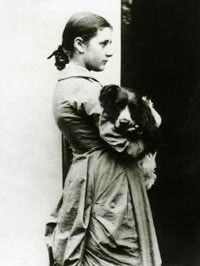
Beatrix Potter never managed to find a publisher and eventually self-published.
This list could go on and on...but suffice it to say, I WILL GET THERE!
Still sending my novel off to people. Yes, still. And still receiving a steady trickle of rejection letters. One nameless agent pointed out that they are only taking on new writers they consider to be very special indeed. Ouch! It's starting to feel kind of personal here! Ok, ok, I know I need to be thick-skinned about all this (who was it after all that said 'Success is 10% inspiration and 90% perspiration?) and keep believing in my novel but this belief is definitely wavering a little at the moment. In fact, time to come clean. Here's the truth of the matter: I am SICK to the back teeth of my novel. Everything I feel about it is clouded with a sense of weariness and that's not good, because if I don't love it, how the hell can I convince anybody else to love it??
Time for a break perhaps. Maybe I need to stop sending it out to agents (though admittedly, I've only used up about 70% of my perspiration quota) and concentrate on other things. Thankfully, I've got a great little writing project up and running which will turn into Christmas presents (no more details here as family members, I know you're reading this!) and I'm really enjoying it. This isn't making me feel weary or despondent and I know it's a way of reaching out with my writing, and actually being read! So thank you, Ms Literary Agent for telling me I'm not very special, but one day - ha ha - you will rue these words!! (And even if you don't, at least I know my family is reading me. Thank you family ;))
When I sent my novel out to ten literary agents several years ago, three of them were interested and asked to see the full manuscript. Fast forward to the present, and I have a much, much stronger manuscript (at least, I believe it to be) and nobody is giving me anything close to green signals. What this means is that in this short space of time the publishing landscape has changed considerably and it's a landscape I'm not very familiar with. I have heard many a time that there are more people out there writing books than reading them (eek, can that really be true?) and of those people that are reading novels, more are reading kindles now than physical books.
Just reading back over what I've written, the pragmatist in me is saying Just get over it. Get over the paper issue, educate yourself on ebooks and get yourself out there. But the romantic, literary me (the 'me' that dreamed up this book in the first place) struggles to get over the 'paper issue' and can't quite embrace the digital technology entity that the publishing industry is evolving into. The world acclaimed Hay-On-Wye Literature festival banned kindles and e-readers this year. But is Hay-On-Wye just charmingly anachronistic, increasingly out of touch with current reading trends; a book loving group of die-hards just digging their heels in?
A few months ago, my local bookshop closed down and I was truly gutted. Langton's had been around for almost a century and as well as being a bookshop, its cafe was home to numerous local groups and on friday mornings I took my kids there for a free story time. One of the guys working there told me they were running at a huge loss each year and just couldn't sustain that. He also told me that a lot of people who continued to buy books from there did so out of 'sympathy'. How can a business possibly survive on sympathy?
Sorry, this is a bit of a gloomy blog. There is so, so much positive in the world of books, I do know that. And I think it's important for me to remember that whether produced digitally or on paper, books still have the capacity to change lives. And they are still WORDS!
I am reading an incredible book at the moment called The Element - How finding your passion changes everything by Ken Robinson, internationally acclaimed leader in creativity, education, innovation and human capacity. The title is slightly dubious I feel, but that's where my skepticism ends. One man's take on creativity and challenging pre-conceived notions on intelligence, I'm finding this book hugely absorbing and inspiring and can't get enough of it right now. He puts out lots of fascinating concepts, such as turning around the question 'How intelligent are you?' to 'How are you intelligent?', arguing that we all possess intelligence, but not necessarily in the way we've come to regard intellect. It's how we use our own particular kind of intelligence in a way that is optimal to each individual. I have a feeling I may be drawing on a lot of what I'm reading in the future, and most things I say about this book will do little justice to it (I urge you to read it!), but I want to share this one example Ken Robinson writes about at the start of the book which just blows me away.
In the 1930's, an 8 year old girl was having difficulty at school. She couldn't concentrate, her schoolwork was poor and she was a disruption in class. The school thought she must have a learning disorder (nowadays a kid would most probably be diagnosed with ADHD) and suggested to her parents that she should be in a school for children with special needs. The girl's parents took her to see a psychologist; she was nervous and sat on her hands to stop herself fidgeting. The psychologist directed all the questions at the parents whilst closely observing the child. Eventually, he asked her parents to talk to them outside and as he left the room, he turned on the radio. Once outside, the doctor asked her parents to just watch through the window and see what she did. Instantly, the girl was off her chair, swaying and gracefully moving in time to the music, completely lost in the joy of it.
The psychologist said to her parents 'You do realise that your daughter doesn't have learning difficulties. She's a dancer. Take her to a dance school.'
And so the young girl was taken to a dance school where finally she could be amongst people who had to move in order to think. Gillian Lynne became a successful ballerina and went on to choreograph some of the most successful shows of all time, including The Phantom of the Opera and Cats.
I think this is a fascinating story on so many levels: that there are a plethora of kinesthetic-learner children out there not being allowed to move around sufficiently at school; that another doctor might have put her on medication and told her to calm down and the suppression of her talents might have resulted in her living a life of frustration; that there are hundreds of thousands of little Gillian's out there, not necessarily dancers-to-be, but struggling to become their authentic selves and find their 'element' as Ken Robinson calls it. Schools are (on the whole) well-meaning institutions that strive to bring out the best in their pupils and set them up for the best possible futures. But what of the standardized testing, using the one size fits all method? Gillian did terribly at her schoolwork, and if it hadn't been for the very observant psychologist she'd visited, she most probably would have continued to do terribly at school. But this didn't mean she wasn't a motivated and brilliant person, she just wasn't 'intelligent' in the way the school system perceived intelligence to be. Alright, you could argue, but this was the 1930's. Perhaps, but record numbers of children in this country have been diagnosed with ADHD and are taking Ritalin. Something to think about.
When I was at primary school, I had the most fantastic teacher. Her name was Mrs Becker and she saw in the young Rebecca a child who was very quiet ('painfully shy' she told me years later) but who came alive with books and words and writing. She encouraged me so much and I shall never, ever forget her. Then I went on to secondary school. It was a very good secondary school, wonderful facilities and very academic and I suddenly found myself not exceptionally good at English and writing but simply 'alright' amongst many conventionally 'clever' girls. I went through my years at this school thinking of myself as decidedly average academically and this, I felt, was my place which nothing could change. The careers advisor at school was a lovely but ineffectual lady who told me that since my predicted grades were average, there wasn't much point going on to study English. At what point in my secondary school career did someone take me aside and say 'But what do you really love to do, nevermind what you perceive to be good or bad or average at, what do you love doing?' You guessed it: never.
It's funny, but reading this book now, I see it so clearly now writing for me was a love, a joy and a passion from a very young age. I am truly not trying to put blame on my schooling or lack of visionary teachers (I think there are vast number of brilliant teachers out there working within decidedly un-brilliant strictures) because I think my story is the same as that of so, so many people. And neither am I saying that if I'd done such and such, things would have turned out so differently for me. There is definitely not point in looking backwards or regretting or apportioning blame. It's the opposite actually; I feel hugely inspired that I know where my passions lie. And it is never, ever too late. As far as my children go, I'm not about to whisk them out of school; alright some things are too prescriptive (homework as you know being one bugbear!), but there are also some wonderful things going on there and my children are happy to go. But I'm feeling as though I can move towards a place of 'letting go' of how they are doing at school. It's an exciting prospect to see what ignites my children's passions now and in the years to come. And reading this book, I feel more than ever before that I must encourage them in whatever it is that lights them up, no matter what it is.
If you have managed to read this far (honestly, I hadn't intended this blog to be so long!) and want to know a little more about the inspiring beliefs of Ken Robinson, watch this wonderful little you tube video.
Hooray, the 75-word story I wrote about in my last blog is being published on Paragraph Planet today. If you want to read it and it's past the date I'm posting this blog, go to the Authors page at the top right of the website and look for my name. It's only 75 words, and call me an egotist, but it still feels good to see my name in print ;)
Another website I love is Post Secret. It's almost a visual equivalent to Paragraph Planet - people send in postcards they make with a few words written on it: a secret, a confession or an affirmation. You may have noticed I love images and almost always use an image at the top of my blog. Years ago, when I did Julia Cameron's 'Artist's way' (a practical manual to finding and using creativity), one of the things I still use in my life is my image file. We were encouraged to start a notebook and cut out and stick in any images that 'speak to us'. Over the years, I've filled a notebook with pictures from newspapers and magazines. I don't need a reason for these images resonating with me, they just do.
Anyway, I hope you enjoy my very, very short story - probably the shortest I've ever written!
My husband and son walking the wilds of Richmond Park last weekend
This morning, just as I was about to leave the house and take the children to school, I suddenly thought that since I'd had a decent night's sleep (not to be underestimated in our household!) and was feeling good, I should grab the opportunity for my thursday writing day and head up to the Royal Festival Hall on London's South Bank. So I grabbed the laptop and paper to read on the train (one of my life's small, rare pleasures) and off I went. Good decision. It's amazing how a small change of scenery like that can inject so much joy and inspiration into my day, even on a drizzly autumnal day like today. I loved watching as the Festival Hall came alive, I loved watching the grey thread of River Thames snaking past as I sat and wrote and I loved visiting (by chance) the exhibition down in the basement of talented prisoners' artwork from up and down the country, revealing their complex and vulnerable interior worlds.
Last week I discovered a site called Paragraph Planet - every day there is a different story told using exactly 75 words. Now this may sound simple as it's such a short number of words, but believe me, it's not! I love the idea of it in a similar way to loving haiku; that it's perfection lies in its simplicity. In 75 words, the writer must capture a moment, a realisation, tell a tale or just relay something to make the reader sit up and take notice. I tried my hand at it last week and sent it in but wasn't altogether happy with it - it was fine, just nothing special. Then this afternoon, walking from the Festival Hall back to Waterloo Station, I was suddenly inspired by something I briefly saw. I couldn't get on to the train quickly enough and once there, grabbed my pen and scribbled my words down on the back of the newspaper. I may be wrong, but I suspect that if either piece is accepted (and if it is, I'll be sure to give you a link from my blog), it will be this second one. Just goes to show that you can't sit and wait around for inspiration to come your way, it hits when we're least expecting it.
My daughter and her friend 'fixing' a house with a toolkit - surely more useful than homework?
How do I feel about my six year old coming home each week from school with enough homework that, if done properly, would mean she spend every single day doing some? To be honest, pretty peeved. I've always felt that they do enough work at school during the day and home time should be just that: home time, to follow their own interests. The fact is that at the age of six, it is just as much about the parent as the child when it comes to homework. Essentially, when homework comes back there is an expectation that the parent sit down with the child and works out sums and assists in writing sentences etc. Do I want to be doing that with my daughter? No. I want my daughter to be playing. But playing is not useful, shock horror.
And get this: I watched a crazy you-tube vid last night called Did you know? and discovered that the top 10 in-demand jobs in 2010 did not EXIST in 2004. So what does that mean? It means that we are preparing our children for jobs that don't even exist, using technologies that haven't even been invented. Even more reason, I believe, for them to be embracing their own hobbies and interests, not being embroiled in homework when they already do six hours of formal learning at school. I know, I know it's not the fault of the teacher or the school, they are simply ticking boxes and this is part of the system that we have bought into but grrr, it does make me feel cross sometimes.
So flicking through the Guardian yesterday, my attention was unsurprisingly caught by an article entitled 'Down with homework.' A columnist called Tim Lott had a good old rant about his six year old and I was quite relieved, to be honest, that I'm not alone in my thoughts. Lott says of homework:
I reluctantly submitted to its inevitability as a child but as an adult I resent it, both on the part of myself and my own children. My six year old sitting down to homework at the weekend is merely academic tokenism.
Academic tokenism - ha, I like that - I might well nick that phrase Mr.Lott. He goes on to say:
Nothing is more precious that those islands of childhood that are left untouched by invading adults and their fund of schemes for the future when you finally make it as a 'worthy citizen.' Let children drift and dream....
Yes, yes, YES! I know things aren't going to change for my daughter - when I mentioned to her teacher last year I was unhappy about the amount of homework given, she looked at me aghast and said 'You're the only parent I've ever heard say that, most parents want more!' Ugh. What can I do? Right, rant over. Back to the homework ;)